

Omega Constellation Pie-Pan
A 1961 Omega Constellation Pie-Pan with dog leg lugs, Onyx markers, and the Caliber 551 — designed by Gérald Genta. Ref. 14900-SC-61.
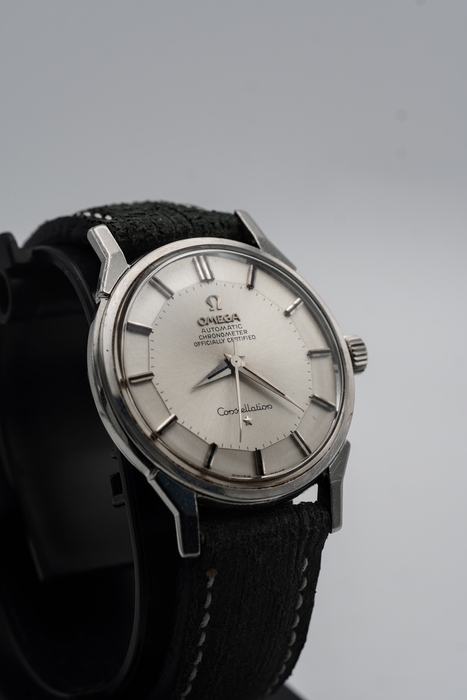
Year: 1961
Reference: 14900-SC-61
Size: 34mm, 18mm lug width, stainless steel
Movement: Omega Caliber 551, self-winding
The Pie-Pan Constellation is one of the most distinctive dial designs of the 1960s — a raised chapter ring with a recessed center creates the characteristic stepped "pie pan" shape. This example features Onyx markers on a non-luminous dial with dog leg lugs, a defining detail of the early Constellation cases. The caseback carries the Observatory emblem: an observatory cupola surrounded by eight stars, present on every Constellation since the line's debut in 1952.
This case was designed by Gérald Genta — the same designer behind the Audemars Piguet Royal Oak and the Patek Philippe Nautilus.
History
Omega introduced the Constellation in 1952 to showcase their highest-grade movements. The observatory caseback motif references Omega's performance at the annual chronometer trials, with the eight stars representing their major chronometric achievements from 1945 to 1952. The cupola design is widely assumed to depict the Geneva Observatory, though Omega's own museum director has noted it's likely a generic depiction rather than a specific building.
The Caliber 551 is a highly regarded movement — Omega's top automatic of the era, built to chronometer-grade tolerances and a direct product of the precision focus that defined the Constellation line.