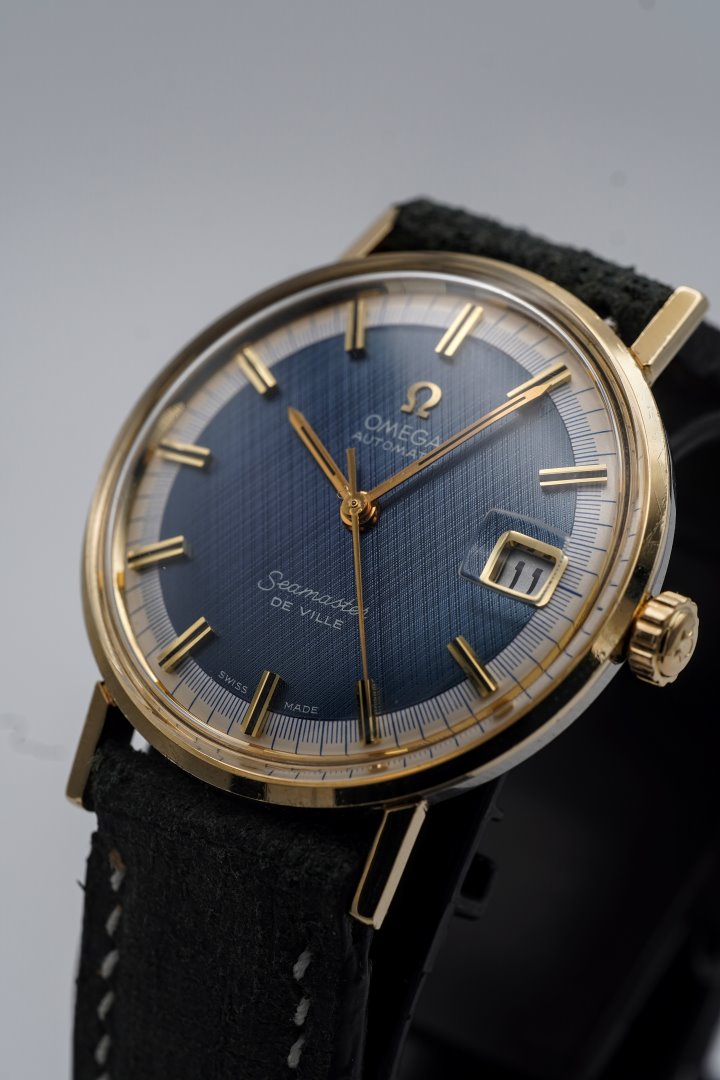
A rare early 1970s Omega Seamaster Deville with a factory textured blue dial, produced in limited numbers for the American market.
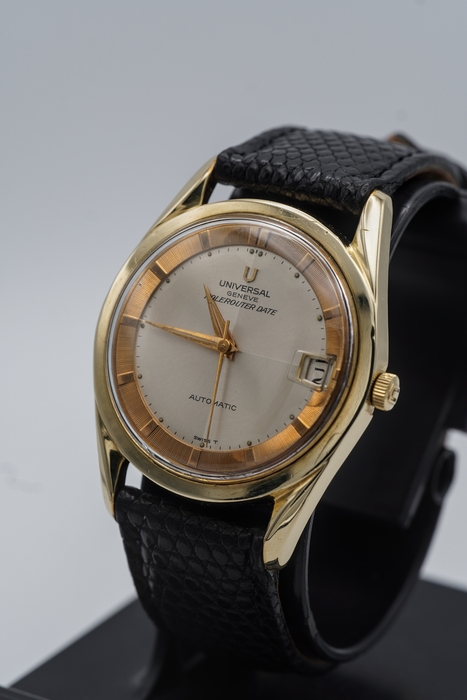
A 1965 Universal Genève Polerouter Date, featuring the iconic Microtor movement. Ref. 204612-1.
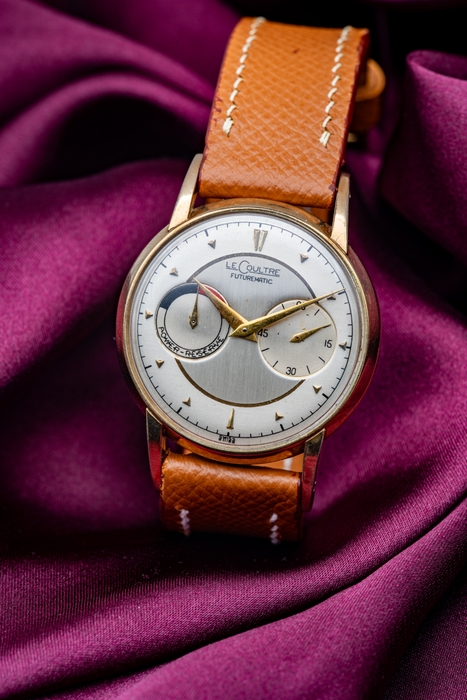
A 1950s LeCoultre Futurematic — the world's first fully automatic watch, with no winding crown on the case and a Caliber 497 movement featuring hacking, power reserve indicator, and rotor stop-work.
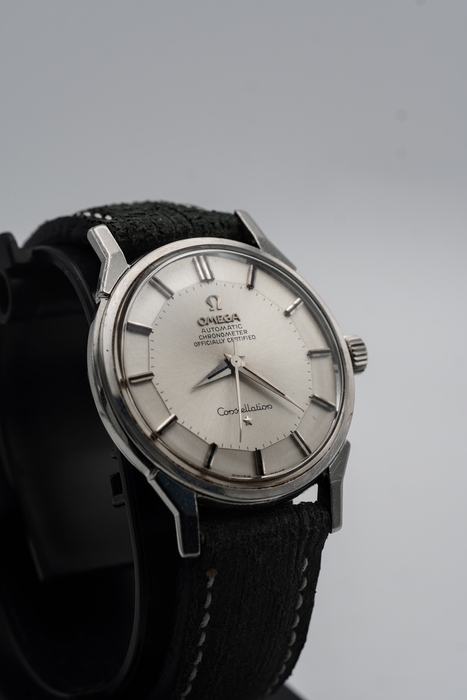
A 1961 Omega Constellation Pie-Pan with dog leg lugs, Onyx markers, and the Caliber 551 — designed by Gérald Genta. Ref. 14900-SC-61.
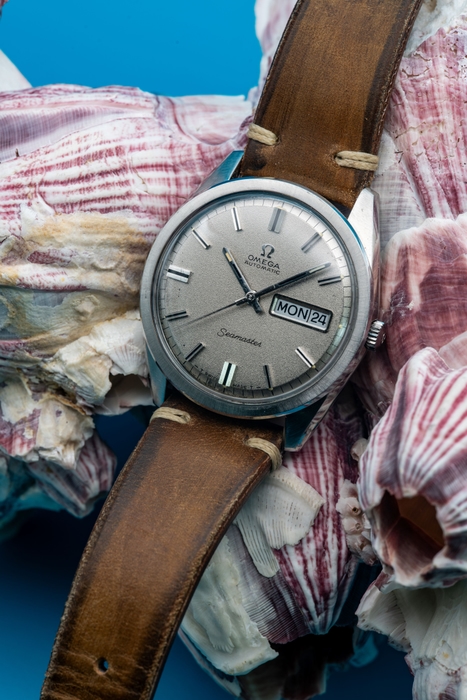
A 1969 Omega Seamaster automatic Day-Date, Ref. 166.032, powered by the Caliber 752 with swan neck regulator and quick-set date.
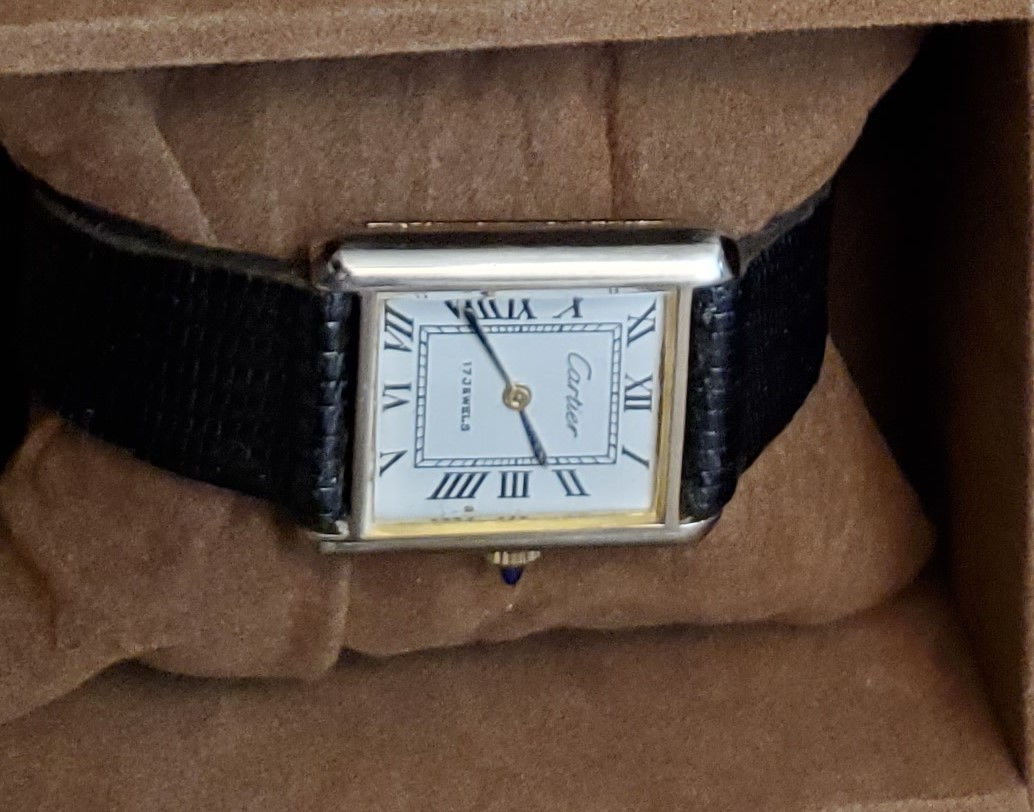
A 1970s Cartier Tank, gold plated, automatic — replated.
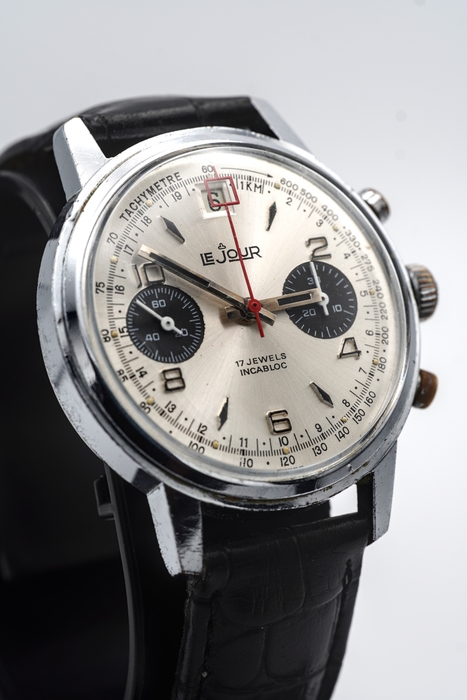
A 1960s LeJour chronograph built on a Leonidas movement and case — the same reference Leonidas sold under their own name — with a red seconds hand featuring a date window cut into it.
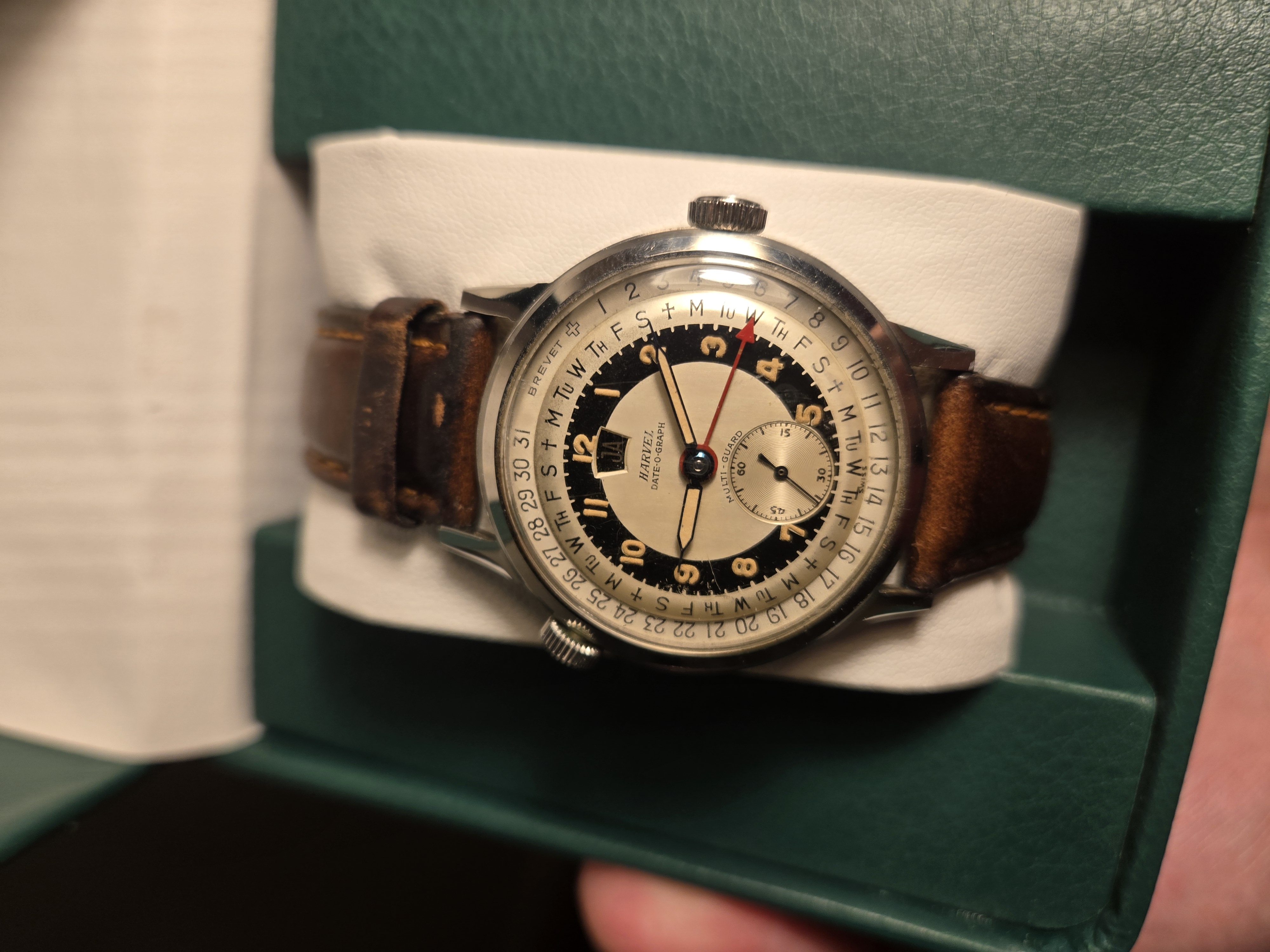
A Harvel Date-O-Graph — an American watch with a rotating date disc that sweeps across the dial, one of the more inventive date display mechanisms of the mid-20th century.
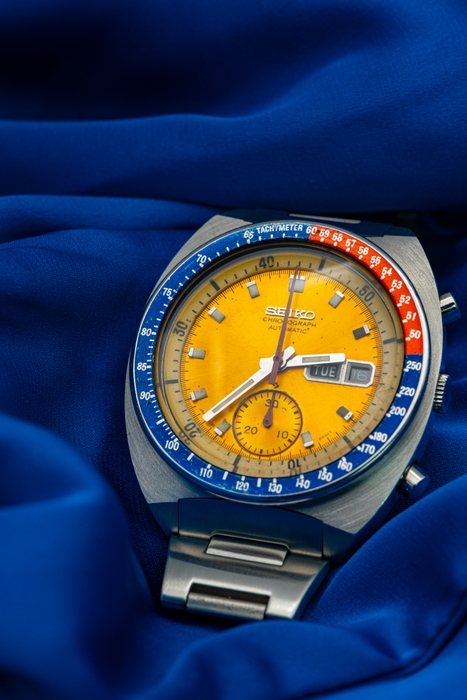
The Seiko 6139 — the first automatic chronograph in space, worn by NASA astronaut William Pogue on Skylab 4 in 1973.
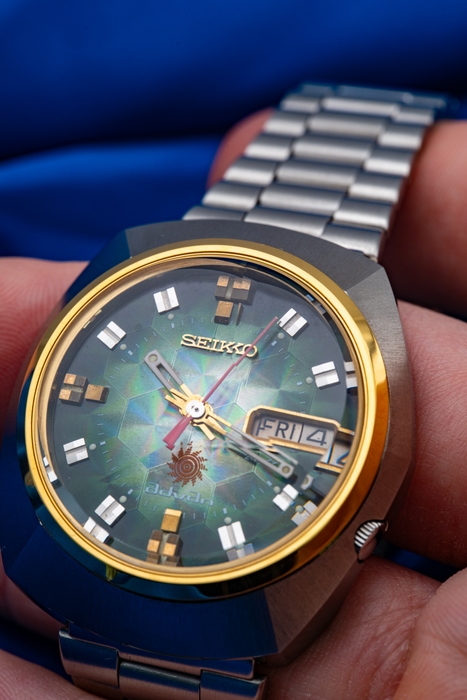
A 1973 Seiko Advan with an asymmetrical case, gold-plated bezel, and a rare multi-tone green dial. Ref. 7019-7230.
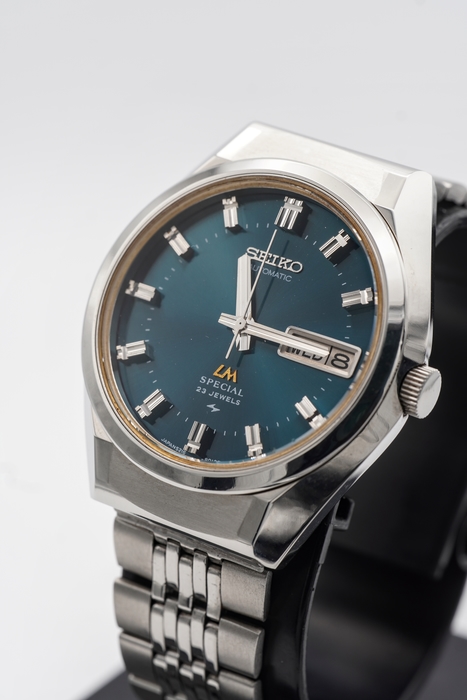
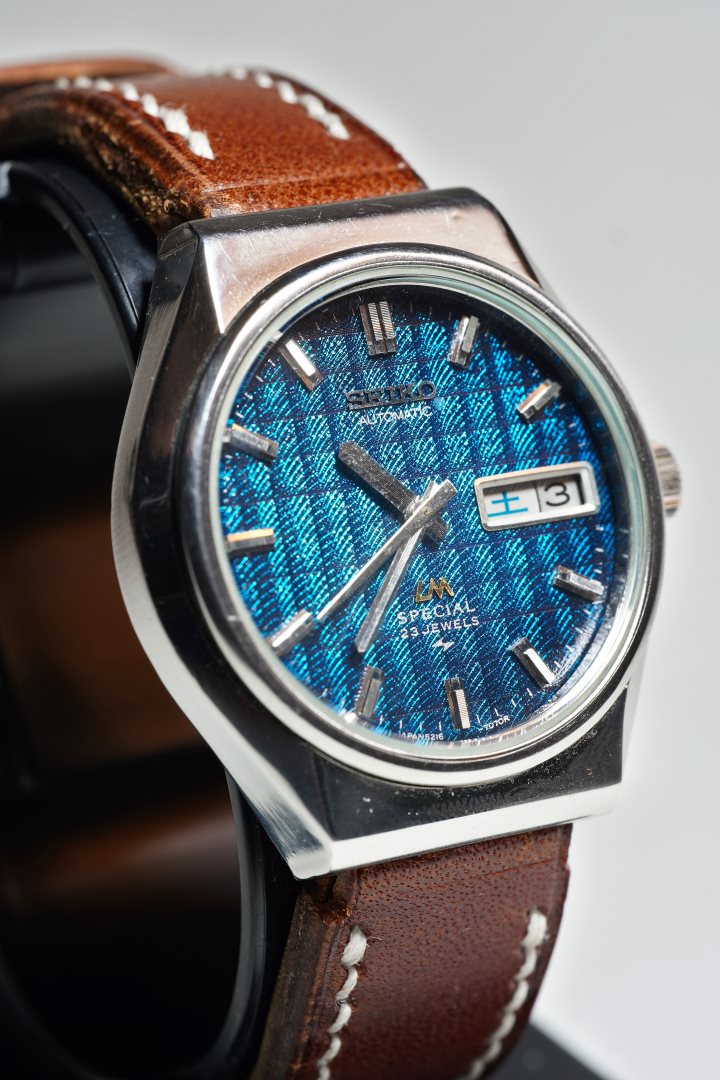
A 1975 Seiko Lord Matic Special with a deep chameleon blue starburst dial and the high-beat 52-series movement — one of Seiko's finest late-era mechanicals.
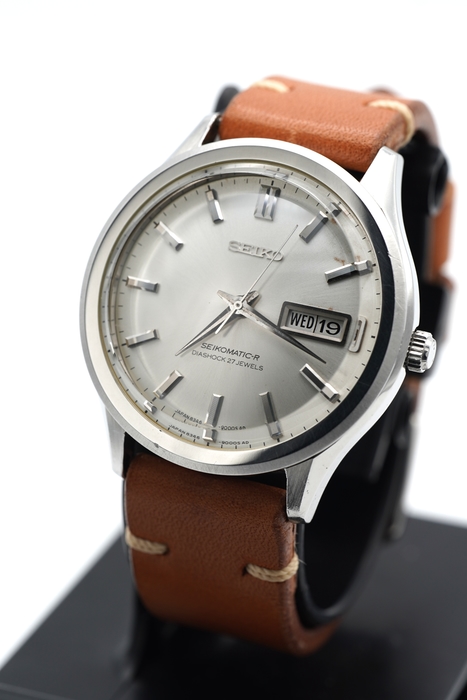
A 1967 Seikomatic-R powered by the slim 83-series movement — one of Seiko's most underappreciated calibers of the 1960s, with quick-set date and hand-winding.
A Seiko Lord Matic Special powered by the high-beat 52-series movement, one of Seiko's most refined automatics of the 1970s. Ref. 5216-7070.