

Seiko 6139 Pogue
The Seiko 6139 — the first automatic chronograph in space, worn by NASA astronaut William Pogue on Skylab 4 in 1973.
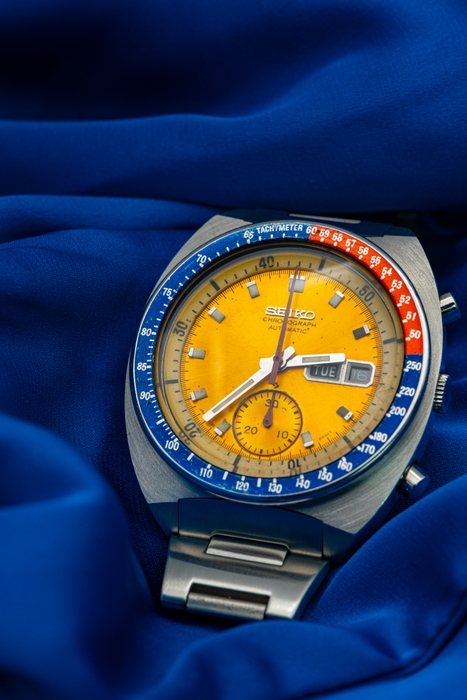
Year: 1969–1977 (production run)
Movement: Seiko Caliber 6139, automatic chronograph, 17 or 21 jewels, vertical clutch, quick-set day/date
Case: Tonneau-shaped, tachymeter bezel, rotating inner bezel with lume triangle
The 6139 earned its nickname in November 1973 when NASA astronaut Colonel William Pogue brought one aboard Skylab 4 — purchased for $64 at an Air Force exchange. He used it alongside his official Omega Speedmaster to time thruster burns, making it the first automatic chronograph in space. November 16th is now unofficially observed as "International Pogue Day."
History
The Caliber 6139 was engineered by Toshihiko Ohki and debuted in October 1968 — predating Zenith's El Primero. Its defining technical achievement was the world's first vertical clutch in a chronograph, enabling instant, clean engagement without the judder of a horizontal clutch design. It also included quick-set day and date functions, an unusual feature for a chronograph at the time.
That Pogue chose a personal purchase over his issued Speedmaster for actual use says something. The 6139 was reliable, legible, and capable — and it proved it in the most demanding environment possible.